2003 – 2007: The next step
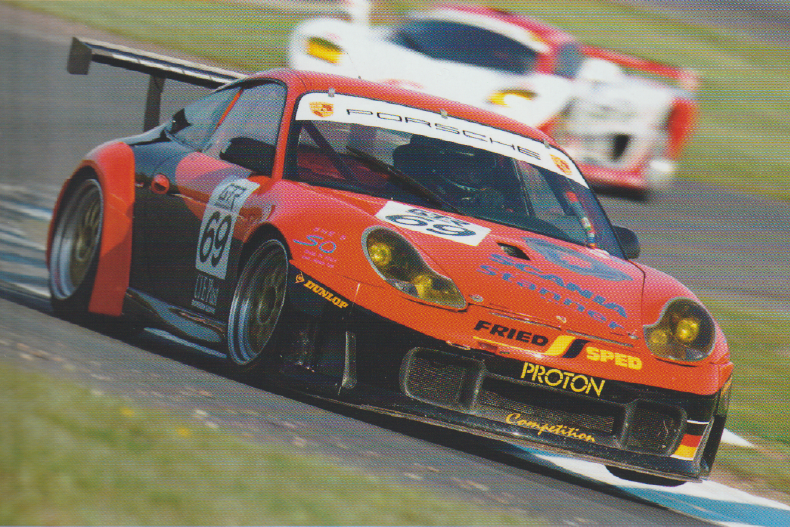
Following the successful competitive debut of the Porsche 993 GT2, the next logical step for Proton Competition was to advance to the next generation of the Porsche 911 platform: the 996 GT3-RS.
What was special about this car?
Although its racing career was relatively short, the Porsche 996 GT3-RS represented several milestones in Porsche history – it was the first water-cooled 911 and the first to carry the legendary GT3 name.
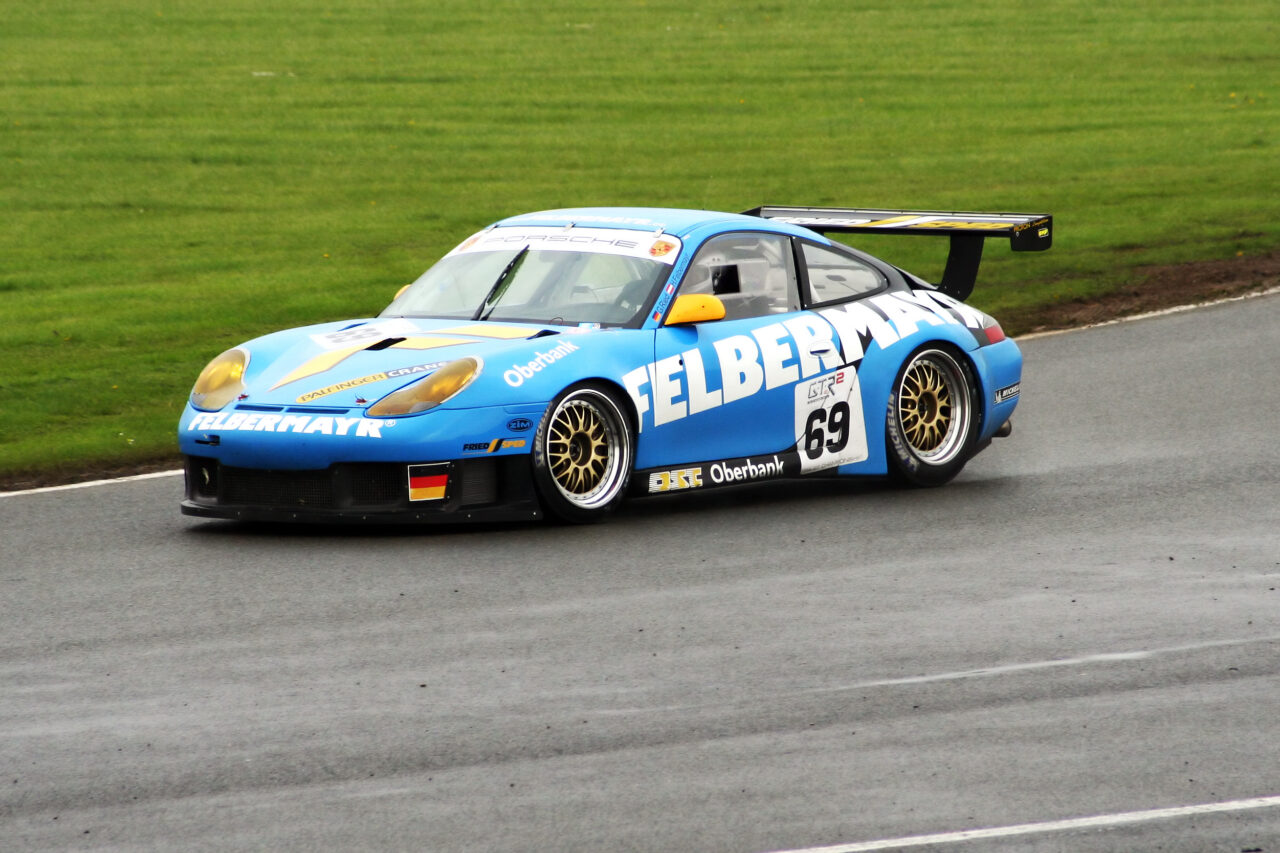
As part of the FIA GT Championship, Proton Competition’s racing commitments were always on the global stage. Here the team’s #69 Porsche 996 GT3-RS takes on the 2006 Brno Supercar 500 in the Czech Republic.
What did we achieve with this car?
Results in the FIA GT Championship steadily improved, with top 6 finishes becoming the norm and podiums a regular occurrence. A standout achievement came in 2005, when the team finished second in the GT2 Teams’ Championship.
This success laid the ideal foundation for our future participation in major international series such as the European Le Mans Series, the Intercontinental Le Mans Cup and the FIA World Endurance Championship.
What was special about the car’s design?
The Proton Competition Porsche 996 GT3-RS marked the beginning of one of GT racing’s most iconic partnerships: Felbermayr-Proton. This collaboration included sponsorship from the technology company Felbermayr and a long-standing relationship with drivers Horst Felbermayr Sr. and Horst Felbermayr Jr. For nearly a decade, the Felbermayr name – and the distinctive sky-blue livery – adorned Proton Competition’s race cars.
Who were the key drivers in this era?
The Porsche 996 GT3-RS chapter was shaped by both continuity and change. Christian Ried was emerging as the team’s cornerstone driver alongside the Felbermayrs, while his father and team founder, Gerold Ried, continued to lend his experience and determination behind the wheel. Proton Competition’s final season with the 996 GT3-RS also marked a turning point for Gerold, who hung up his helmet at the end of 2007, closing the book on Proton’s first generation of racing leadership.